
Hitting the Road in Dubai: Essential Tips for 2025
Driving in Dubai presents unique challenges and rewards. This listicle provides eight essential Dubai driving tips for navigating the city's roads safely and efficiently in 2025. Whether you're a tourist, business executive, or resident, these tips will help you understand local traffic regulations, navigate the road system, master defensive driving, handle extreme weather, manage parking and tolls (Salik), and prepare for accidents or breakdowns. Follow these Dubai driving tips for a smooth and confident driving experience.
1. Understand Dubai's Traffic Rules and Regulations
Navigating Dubai's vibrant cityscape requires more than just a luxurious vehicle; it demands a firm grasp of the emirate's specific traffic rules and regulations. This is arguably the most crucial of all Dubai driving tips, especially for newcomers. Understanding these regulations isn't merely a suggestion—it's essential for safe driving, avoiding hefty fines, and ensuring a smooth and enjoyable experience on the roads. Whether you're a tourist exploring the city's iconic landmarks, a business executive on a tight schedule, or a resident enjoying a weekend getaway, adhering to these rules is paramount.
The Roads and Transport Authority (RTA) of Dubai enforces strict regulations concerning speed limits, lane discipline, overtaking, and a multitude of other traffic violations. Dubai's commitment to road safety is reflected in its robust enforcement and advanced traffic management systems. These systems, while ensuring safer roads, also mean that ignorance of the law is no excuse.
Why This Matters:
Dubai's traffic laws might differ significantly from what you're accustomed to in your home country. For example, the emirate has a zero-tolerance policy for drunk driving, with severe penalties including imprisonment and deportation. Furthermore, a black points system is in place for traffic violations. Accumulating too many points can lead to license suspension or even revocation. Speed cameras (radars) are ubiquitous throughout the city, monitoring traffic flow and capturing speeding violations with high accuracy. Understanding these nuances is crucial for avoiding unwanted fines and legal repercussions.
Features and Benefits:
- Clear and Well-Enforced Rules: Dubai's stringent traffic laws contribute significantly to improved road safety for everyone. The strict enforcement encourages responsible driving behavior and minimizes accidents.
- Digital Systems: Paying fines and managing traffic-related matters is streamlined through online platforms and the RTA Dubai app, offering convenience and efficiency.
- Comprehensive Road Network: Dubai boasts a modern and well-maintained road network, facilitating easy navigation and efficient travel throughout the city.
Pros and Cons:
- Pros: Enhanced road safety, convenient online systems, and clear regulations.
- Cons: Fines can be expensive compared to other countries, and some rules might differ from international standards, requiring a learning curve for newcomers.
Examples of Violations and Penalties:
- Running a red light: AED 1,000 fine and 12 black points.
- Using a mobile phone while driving: AED 800 fine and 4 black points.
Actionable Dubai Driving Tips:
- Download the RTA Dubai app: This app provides up-to-date information on traffic rules, fines, and other essential driving-related services.
- Familiarize yourself with common road signs: Dubai uses international road signs, but understanding their specific applications within the city's context is important.
- Check for any outstanding fines regularly: You can check for fines through the Dubai Police website or the RTA app.
- Always carry your driving license, vehicle registration, and insurance: These documents are mandatory and must be presented to authorities upon request.
Popularized By: Roads and Transport Authority (RTA), Dubai Police (www.rta.ae)
This first point in our Dubai driving tips is foundational to a safe and pleasant driving experience. By understanding and respecting the local traffic regulations, you can contribute to a safer road environment for everyone while avoiding potential fines and complications during your time in Dubai. This is especially crucial for those accustomed to different driving norms, ensuring a smooth transition to navigating Dubai's roads.
2. Navigate Dubai's Unique Road System
Mastering Dubai's road system is essential for a smooth driving experience in this bustling metropolis. The network is a blend of modern, multi-lane highways and complex interchanges, often featuring a naming convention that can initially feel overwhelming for newcomers. Understanding its structure is crucial for anyone looking to explore the city independently, whether an international tourist, a business executive, or a local resident. This understanding is one of the most crucial Dubai driving tips you'll need.
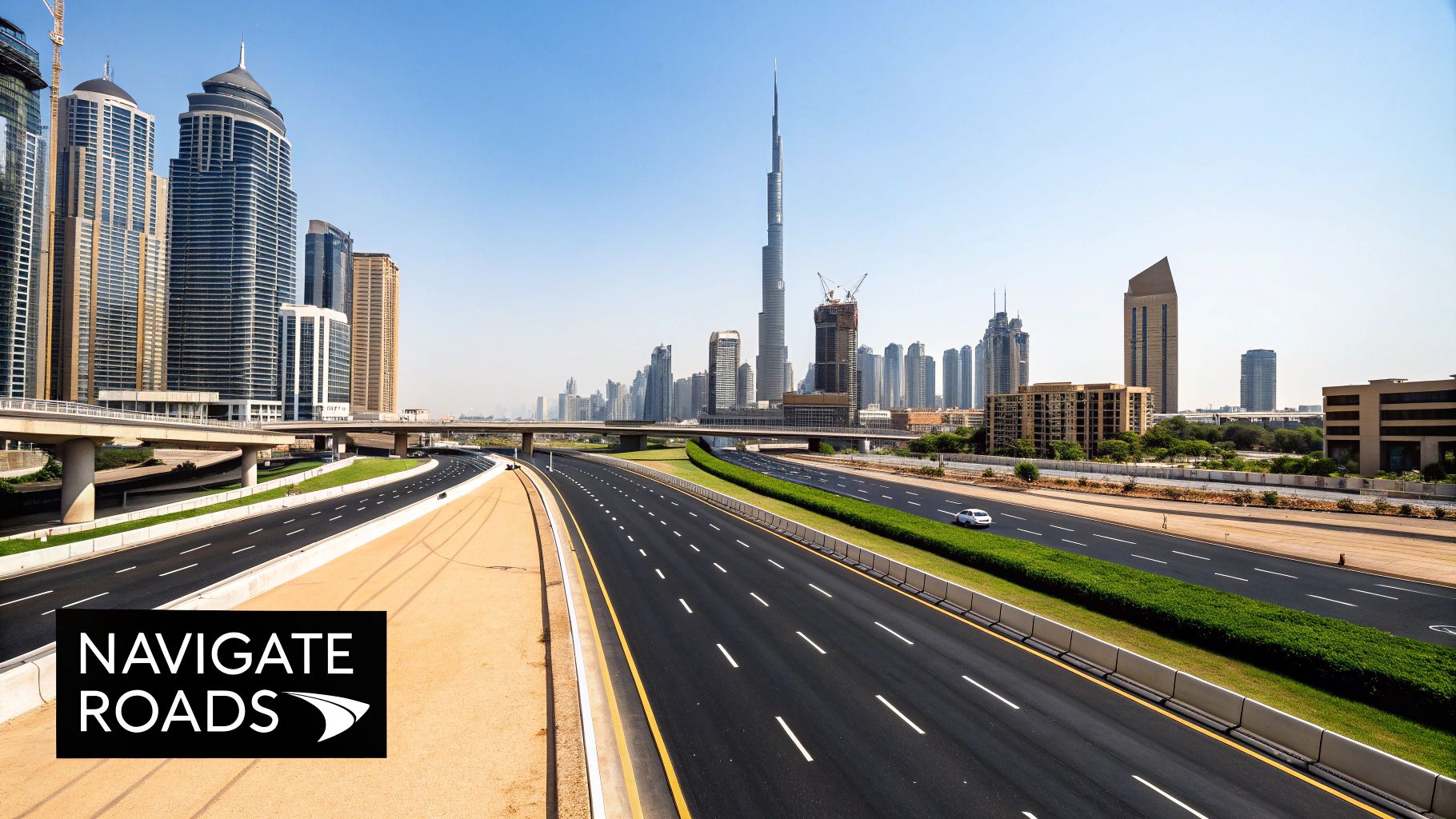
Dubai's main arteries, such as the iconic Sheikh Zayed Road (E11), run parallel to the coastline, offering stunning views and high-speed connectivity. Numbered roads, categorized as E-roads (federal highways connecting different emirates) and D-roads (internal Dubai roads), form a grid system across the city, exemplified by routes like the E311 and D89. This combination of named and numbered routes forms the backbone of Dubai's road network. The system is well-maintained with clear signage in both Arabic and English, making GPS navigation highly effective.
One of the distinctive features of Dubai's roads is the frequent use of roundabouts. Exit numbers on highways often correlate with kilometer markers, a system that can be efficient but requires vigilance. Being aware of these kilometer-based exits is a vital Dubai driving tip. Additionally, the naming convention often incorporates prominent Sheikh names alongside the numerical system, adding another layer of complexity for those unfamiliar with the local context.
While generally efficient, navigating this system does come with its challenges. The design of some exits necessitates last-minute lane changes, which can be tricky during peak traffic. Rush hour, typically between 7-9 AM and 5-8 PM, sees a significant surge in traffic volume, particularly around key areas like Business Bay, Downtown Dubai, and Jumeirah Beach Residence (JBR).
Tips for Navigating Dubai's Roads:
- Utilize Navigation Apps: Leverage real-time traffic data provided by apps like Google Maps or Waze to optimize your route and avoid congestion. This is especially helpful for those unfamiliar with the city layout.
- Learn Key Highway Numbers: Familiarizing yourself with major highway numbers like E11, E311, and E611 will enhance your understanding of directions and make navigation smoother.
- Plan for Extra Time: Factor in extra travel time during peak hours, particularly if your journey involves passing through heavily congested areas.
- Watch for Exit Numbers: Pay close attention to exit numbers, as they often appear with minimal advance notice. This proactive approach can prevent missed exits and unnecessary detours.
For those planning luxury transportation, corporate travel, special celebrations, or even weekend getaways, understanding these Dubai driving tips is paramount. The efficiency and accessibility of the road network contribute significantly to the city's vibrant atmosphere and ease of movement. You may want to learn more about Navigate Dubai's Unique Road System for further insights. Being prepared and informed will empower you to explore Dubai confidently and enjoy all that this dynamic city has to offer.
3. Master the Art of Defensive Driving
Driving in Dubai presents a unique set of challenges. The city's roads are shared by a multinational population with diverse driving styles and cultural norms. This, combined with the high-speed environment on major highways and the prevalence of luxury vehicles, necessitates a defensive driving approach. Mastering this technique is crucial for a safe and stress-free driving experience in the emirate. Defensive driving involves being constantly aware of your surroundings, anticipating potential hazards, and reacting proactively to avoid accidents. It means being prepared for sudden lane changes, tailgating, and other unexpected maneuvers. This is especially important in Dubai where driving behaviors can vary significantly.
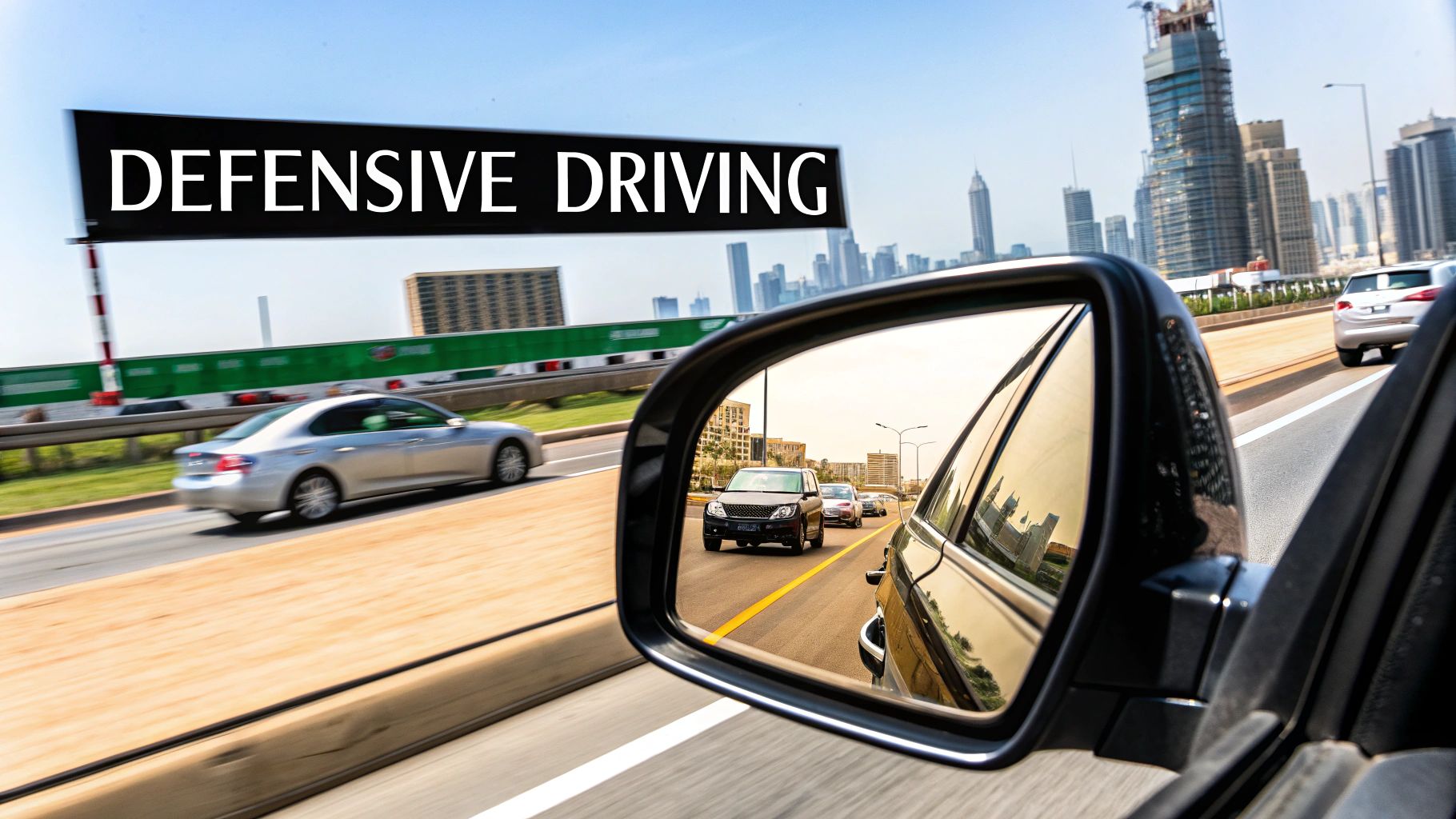
For example, flashing headlights is often used to signal an approaching vehicle at high speed wanting to pass, while sudden lane changes without indicators are unfortunately common, particularly near exits. Luxury vehicles may sometimes drive aggressively, adding another layer of complexity to the driving environment. Successfully implementing defensive driving means anticipating these behaviors and adjusting your driving accordingly. You might, for instance, move to the right lane to allow a faster vehicle to pass or increase your following distance to give yourself more reaction time.
This approach significantly reduces the risk of accidents, a key priority for anyone navigating Dubai's roads. It also helps manage stress while driving in heavy traffic, making your journey more pleasant. However, defensive driving requires constant vigilance, which can be tiring, and you may need to adjust your natural driving style.
Here are some essential defensive driving tips for Dubai:
- Maintain a safe following distance: Keep at least a 2-second gap between your vehicle and the one in front. This provides ample time to react to sudden braking.
- Check your mirrors frequently: Be aware of fast-approaching vehicles from behind and in adjacent lanes.
- Avoid the far left lane: Unless overtaking, stick to the right lanes. The leftmost lane is typically used by faster-moving traffic.
- Stay calm and avoid confrontation: Do not engage with aggressive drivers. Maintain your composure and prioritize your safety.
- Use indicators well in advance: Signal your intentions clearly and early to give other drivers sufficient warning.
This crucial skill deserves a place in any Dubai driving tips list precisely because of the unique driving conditions in the city. From the high speeds on Sheikh Zayed Road to the bustling traffic around Downtown Dubai, defensive driving is paramount for ensuring a safe and comfortable journey, whether you're a tourist, a business executive, or a local resident. Institutes like the Dubai Driving Center and Emirates Driving Institute emphasize the importance of this technique. Learn more about Master the Art of Defensive Driving. This proactive approach is beneficial for anyone seeking luxury transportation, planning special celebrations, or simply navigating the city's vibrant roads. By mastering defensive driving, you can confidently enjoy Dubai's dynamic driving landscape while prioritizing your safety and peace of mind.
4. Cope with Extreme Weather Conditions
Driving in Dubai presents unique challenges due to the region's extreme weather conditions. Scorching summer temperatures, occasional heavy downpours, dense fog, and sandstorms can significantly impact road visibility and driving safety. This is why understanding how to navigate these conditions is crucial for any driver in Dubai, making this a vital addition to our Dubai driving tips.
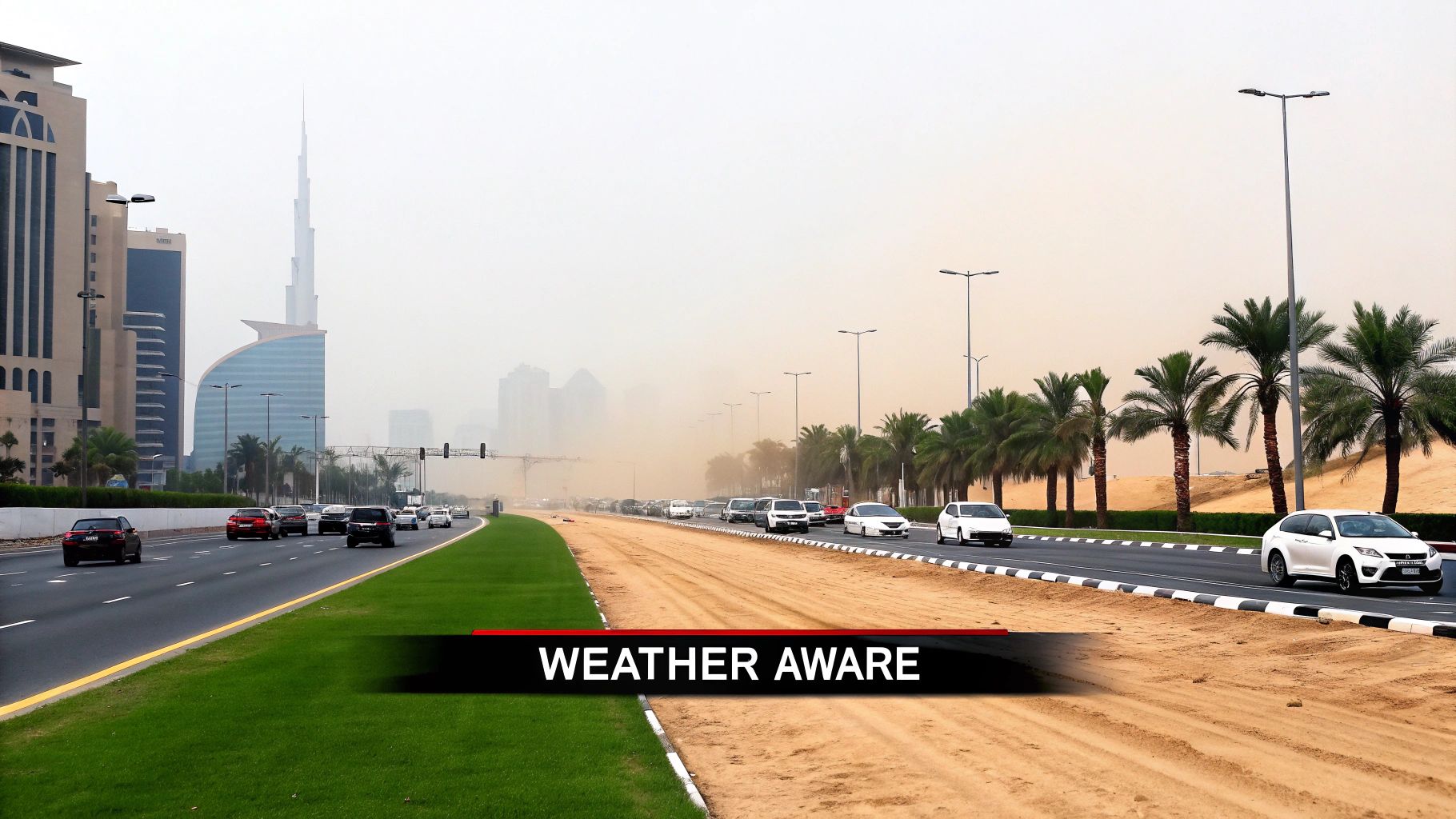
Dubai summers regularly see temperatures exceeding 45°C (113°F), putting a strain on your vehicle's cooling system. While the road infrastructure is generally well-equipped to handle these conditions, the intense heat can impact tire pressure and overall vehicle performance. On the other end of the spectrum, winter months can bring dense fog, particularly in the mornings, reducing visibility to dangerously low levels. Furthermore, while less frequent, heavy rainfall can lead to flash floods, making some roads impassable. Sandstorms, though not a daily occurrence, can also dramatically reduce visibility and create hazardous driving conditions.
Pros:
- Modern road infrastructure designed to withstand extreme weather.
- Advanced weather warning systems via SMS and radio (provided by entities like the National Center of Meteorology and Dubai Police).
Cons:
- Increased strain on vehicle air conditioning systems during summer.
- Significantly reduced visibility during adverse weather, increasing the risk of accidents.
Examples of Weather Impacts:
- In February 2023, heavy rainfall caused significant flooding on major roads in Dubai, disrupting traffic and causing some road closures.
- During winter months, morning fog can reduce visibility on highways to less than 50 meters, making driving extremely hazardous.
Actionable Tips for Dubai Driving in Extreme Weather:
- Summer: Maintain your vehicle's cooling system with regular checks and servicing. Check tire pressure frequently as heat can cause fluctuations.
- Fog and Rain: Reduce speed significantly and maintain greater following distances. Use fog lights appropriately when visibility is reduced, but avoid using high beams as they can reflect back and further impair visibility.
- Sandstorms: If caught in a sandstorm, pull over to a safe location away from traffic and wait for the storm to subside. Do not attempt to drive through heavy sandstorms.
- General: Consider delaying travel during severe weather warnings issued by the National Center of Meteorology or Dubai Police. Regularly clean your windshield and headlights to combat dust accumulation, which can further reduce visibility.
This focus on extreme weather preparedness is particularly relevant for our target audience. International tourists, business executives, and those planning special events need to be aware of these conditions to ensure safe and comfortable travel. Whether you're driving a luxury rental car or navigating to a high-profile event, understanding how to handle Dubai's weather extremes is essential for a smooth and safe experience. Local residents, of course, also benefit from these reminders to ensure their weekend getaways and daily commutes remain incident-free. By following these Dubai driving tips, you can navigate the roads safely and confidently, regardless of the weather.
5. Understand Parking Regulations and Systems
Navigating Dubai's roads goes beyond just driving; understanding the parking regulations is crucial for a smooth experience. This is especially important among our Dubai driving tips, whether you are a tourist exploring the city's attractions, a business executive attending meetings, or a resident going about your daily life. A solid grasp of the parking system will save you time, money, and potential fines, contributing significantly to a stress-free driving experience in the emirate.
Dubai operates a comprehensive paid parking system managed by the Roads and Transport Authority (RTA). Failing to adhere to these regulations can result in fines, so taking the time to understand the system is essential. The system is well-organized and offers multiple payment options, ensuring convenience for drivers. This makes understanding the system an essential Dubai driving tip.
How it Works:
Dubai uses color-coded parking zones (A, B, C, and D) with varying rates and time restrictions. These zones are clearly indicated by colored curbs and signage, making it easy to identify the applicable rules. Digital payment options are widely available, allowing you to pay via SMS, mobile apps (like the RTA Dubai app), or parking meters. Dedicated resident parking is available in certain areas, providing convenience for those living within designated zones. Enforcement is strict, with regular patrols ensuring compliance.
Examples:
- Zone A (high-demand areas): Typically costs AED 4 per hour with a maximum stay of 2-3 hours. These zones are often located in central business districts and popular tourist areas.
- Mall of the Emirates: Offers smart parking with license plate recognition technology, simplifying entry and exit procedures. Many other malls utilize similar technology.
Pros:
- Well-organized system with clear signage.
- Multiple payment options (SMS, apps, parking meters).
- Ample parking available in most areas, including malls and attractions.
Cons:
- Parking rates can be expensive in premium locations (Zone A).
- Limited free parking options in the city center.
Actionable Tips for Drivers in Dubai:
- Download the RTA Dubai app: This app provides real-time parking availability, allows for easy mobile payments, and helps you locate your parked car. It's a must-have for any driver in Dubai.
- Note your zone code and parking space number: This information is crucial for SMS payments.
- Display your parking ticket visibly: If using a physical ticket, ensure it's clearly displayed on your dashboard to avoid fines.
- Check mall validation policies: Many malls offer free or discounted parking with validated purchases – take advantage of these offers.
- Be aware of special event days: During special events or public holidays, normal parking rules may be altered. Check the RTA website or app for updates.
- Consider Valet Parking: For a hassle-free experience, particularly at high-end destinations, consider using valet services. While more expensive than self-parking, it offers convenience and peace of mind.
Why This Deserves a Place in the List:
Parking is an integral part of the driving experience in Dubai. Understanding the regulations and systems ensures a seamless and hassle-free trip, allowing you to focus on enjoying the city's vibrant offerings without the worry of parking fines or difficulties finding a spot. This is particularly important for those unfamiliar with the city, making it a crucial inclusion in our Dubai driving tips. By following these tips, you can avoid unnecessary expenses and contribute to a more enjoyable and stress-free experience on the roads of Dubai.
6. Prepare for Toll Gates (Salik)
Navigating Dubai's impressive road network is a key part of the driving experience, and understanding the Salik toll system is crucial for a smooth and cost-effective journey. This automated system is a vital component of Dubai's traffic management strategy and deserves a spot on any list of Dubai driving tips. It helps keep traffic flowing on major roads, but it's essential to be prepared to avoid unexpected charges.
Salik operates using gateless electronic toll collection. Each time you pass under a Salik gantry, a fee of AED 4 is automatically deducted from a prepaid account linked to your vehicle's registration number. This technology uses automatic number plate recognition, so there's no need to slow down or stop at toll booths. This seamless system contributes significantly to reducing congestion on Dubai's busiest roads.
Several key features distinguish the Salik system:
- Gateless Electronic Tolling: No physical barriers or booths mean uninterrupted traffic flow.
- Fixed AED 4 Charge: Each passage under a Salik gantry incurs a flat AED 4 fee.
- No Daily Cap: Be mindful that charges accumulate with each passage; there's no daily limit.
- Automatic Number Plate Recognition: Your vehicle is automatically detected and charged.
Pros:
- Reduced Congestion: Salik significantly improves traffic flow on major roads.
- Convenience: The gateless system ensures a smooth and uninterrupted drive.
- Easy Account Management: Online platforms make it simple to manage your Salik account and balance.
Cons:
- Accumulating Costs: Passing through multiple Salik gates daily can quickly add up.
- Rental Car Fees: Be aware that rental companies often add administration fees for Salik usage.
Examples of Salik Gates:
- The Business Bay Crossing Salik gate connects Downtown Dubai to Al Khail Road.
- Al Maktoum Bridge Salik gate connects Bur Dubai to Deira.
Essential Tips for Managing Salik:
- Register for an Account: If you're a resident or frequent visitor, registering for a Salik account gives you direct control over your balance and usage.
- Plan Your Routes: Utilize navigation apps to explore alternative routes that might minimize Salik crossings, especially for daily commutes.
- Check Rental Car Accounts: Ensure your rental car has an active Salik account with sufficient balance to avoid fines.
- Maintain Sufficient Balance: Regularly top up your Salik account to avoid incurring penalties for insufficient funds.
- Consider Alternative Routes: While some alternative routes might take longer, the time saved versus toll costs could be worth considering.
Toll roads in Dubai operate using this electronic system called Salik. While there aren't free toll roads, understanding how to manage toll costs is essential. For insights on minimizing similar expenses in other areas, explore resources like guides to free toll numbers from Cloud Move. This can be particularly helpful for business travelers looking to manage communication costs effectively.
By understanding and effectively managing your interaction with the Salik system, you can ensure a smoother, more predictable, and potentially more economical driving experience in Dubai. Whether you're a tourist exploring the city's attractions, a business executive navigating to meetings, or a resident commuting daily, mastering Salik is an integral part of mastering Dubai's roads.
7. Handling Accidents and Breakdowns
Knowing how to handle accidents and breakdowns is a critical Dubai driving tip, especially for those unfamiliar with local procedures. Unlike some other regions, the process in Dubai is highly structured and requires specific steps for both insurance claims and roadside assistance. This is vital for maintaining order and ensuring the safety of all road users in this bustling metropolis.
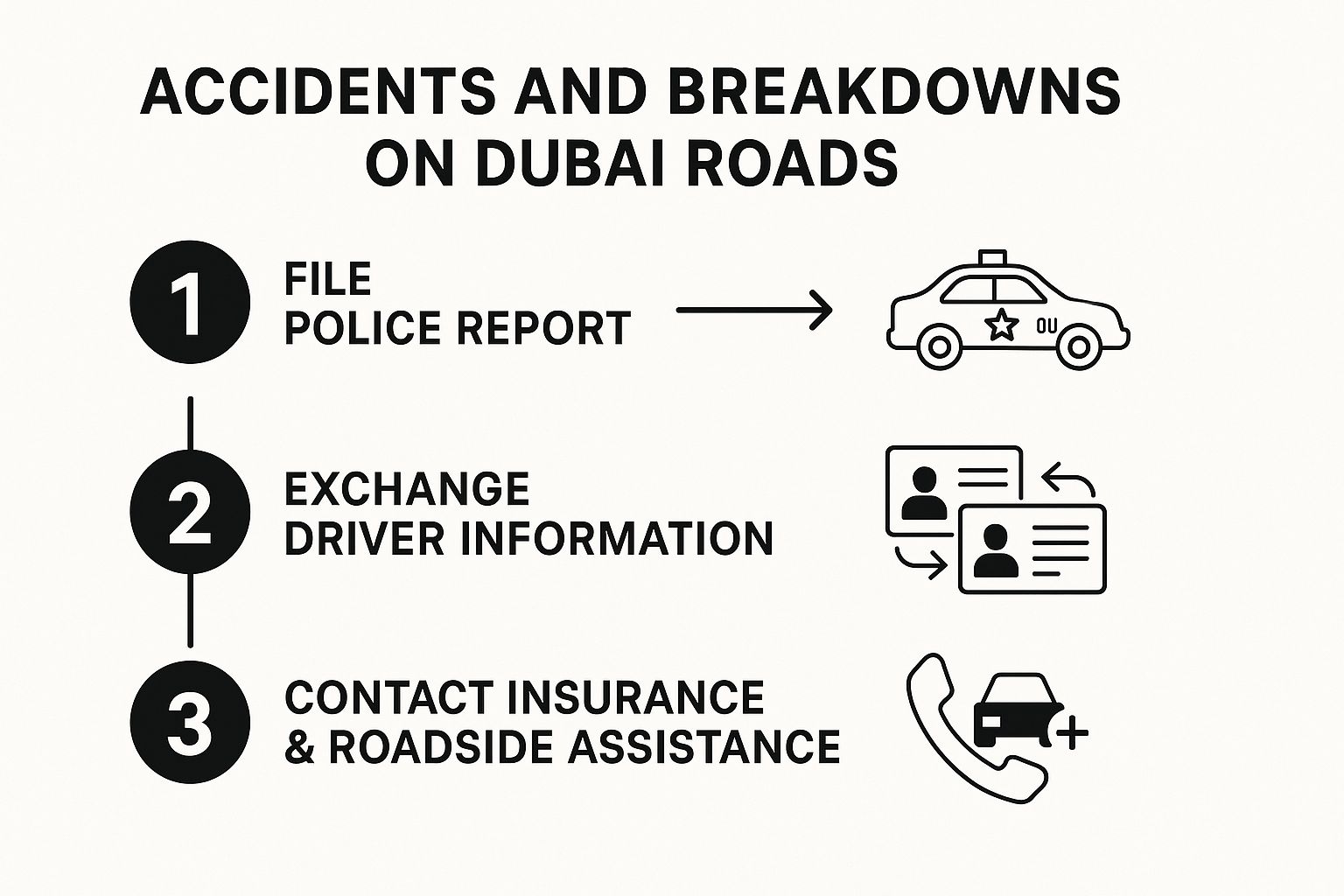
The infographic illustrates the process for handling minor accidents in Dubai. It starts with securing the scene and checking for injuries, followed by reporting the incident through the Dubai Police app. The importance of moving the vehicles to a safe location (if possible) is highlighted to avoid obstructing traffic flow, a crucial step given the busy nature of Dubai's roads. Finally, the infographic emphasizes exchanging information and waiting for the police report, which is essential for insurance claims. The clear, step-by-step visual guide simplifies the process, making it easier for drivers to navigate a potentially stressful situation.
A mandatory police report is required for all accidents in Dubai, no matter how minor they seem. This report is essential for insurance claims. The Dubai Police have streamlined the process with a dedicated accident reporting app, making it more efficient, especially for minor incidents. There are established procedures for moving vehicles after minor accidents to prevent further congestion, and strict penalties are enforced for leaving the scene of an accident. This rigorous approach ensures accountability and facilitates the smooth flow of traffic.
Pros:
- Efficient digital reporting system reduces waiting times for police.
- Well-organized emergency services ensure quick response times.
- Clear documentation facilitates straightforward insurance claims.
Cons:
- Language barriers can sometimes complicate accident reporting.
- The process, even with the app, can be time-consuming during peak hours.
Examples:
- The Dubai Police's 'We Are All Police' app enables drivers to report minor accidents quickly and efficiently without waiting for officers to arrive at the scene.
- In the event of a major breakdown on a busy road like Sheikh Zayed Road, assistance typically arrives within 15-20 minutes.
Tips for Handling Accidents and Breakdowns in Dubai:
- Download the Dubai Police app: Do this before you need it, so it’s ready to go in case of an accident.
- Move vehicles to the roadside: If it’s a minor accident and safe to do so, move the vehicles to the side of the road to avoid obstructing traffic.
- Exchange information: Always exchange contact and insurance information with other drivers involved.
- Document the scene: Take photos of the damage and the accident scene from multiple angles.
- Emergency numbers: Keep these numbers handy: Police (999), Ambulance (998), RTA (8009090).
- Breakdown safety: Turn on hazard lights and place warning triangles if your vehicle breaks down.
This information is especially relevant to our target audience, whether they are driving a luxury rental car, navigating the city for business, or planning a special event. Knowing these procedures offers peace of mind and ensures they can handle any unexpected incidents efficiently. This section deserves its place in the list of Dubai driving tips because accidents and breakdowns, while hopefully avoidable, are possibilities any driver should be prepared for.
This video provides further information on using the Dubai Police app and navigating accident procedures. Having a resource like this readily available can significantly reduce stress and uncertainty during such situations. The Dubai Police and RTA Dubai have popularized these procedures and resources to ensure road safety and efficiency for all drivers.
8. Fuel Stations and Vehicle Maintenance
Navigating Dubai's roads requires understanding its fueling and car maintenance landscape. This is crucial for a smooth and hassle-free driving experience, making it a vital inclusion in our Dubai driving tips. Dubai boasts a comprehensive network of fuel stations, primarily operated by ENOC, EPPCO, and ADNOC. These stations offer more than just petrol; they're often one-stop shops for various automotive and convenience needs. This is particularly helpful for those unfamiliar with the city, allowing for efficient stops and minimizing downtime.
These fuel stations typically operate on a full-service model, meaning attendants will pump your gas for you. You'll find multiple fuel types available, including Special 95, Super 98, and diesel. While Special 95 is suitable for most vehicles, always check your vehicle manufacturer's recommendations. Several stations have also started introducing self-service options, offering greater flexibility and control over the fueling process, particularly appealing to those accustomed to this method. Beyond fuel, these stations often house integrated convenience stores like ENOC/EPPCO's Zoom, stocking groceries, snacks, and other necessities. You'll often find quick-service restaurants located within the station complex, making it convenient to grab a bite on the go. ADNOC Flex offers a good example of the diverse services available, providing both self-service and premium full-service fueling options depending on your preference.
Pros:
- Convenient 24/7 operation: Most fuel stations operate around the clock, ensuring you can refuel whenever needed. This is invaluable for those early morning departures or late-night arrivals.
- Relatively inexpensive fuel: Compared to many European countries, fuel prices in Dubai are generally lower, providing a welcome cost saving for drivers.
- Multiple payment options: Stations accept various payment methods, including credit/debit cards and mobile payment solutions, adding to the convenience.
Cons:
- Peak hour queues: Expect potential delays and longer queues during peak commuting hours, especially in busier areas of the city. Planning your refueling stops outside of these periods can save valuable time.
- Limited EV charging: While improving, the electric vehicle charging infrastructure is still less developed than petrol stations, particularly outside major urban centers. This is an important consideration for those driving electric vehicles.
Tips for Fuel and Vehicle Maintenance in Dubai:
- Check your vehicle manufacturer’s recommendations for the correct fuel type. Most cars in Dubai use Special 95.
- Due to Dubai's harsh climate, particularly the extreme heat, more frequent vehicle maintenance checks are advisable. This includes more regular oil changes compared to what you might be used to in milder climates.
- Keep your windshield washer fluid topped up. Dust and sand can accumulate quickly on your windshield, obstructing visibility.
- Consider tinting your car windows (within the legal limits) to help reduce the intense heat inside the vehicle, enhancing passenger comfort.
- Plan your refueling stops strategically outside peak hours – typically the morning and evening commutes – to avoid potential delays.
Learn more about Fuel Stations and Vehicle Maintenance for maintaining your luxury vehicle in top condition. This is especially relevant to our target audience, which includes those accustomed to high-end vehicles and expecting impeccable maintenance service. Whether you're a tourist exploring Dubai in a rented luxury car, a business executive requiring reliable transportation, or a resident enjoying a weekend getaway, understanding Dubai's fuel stations and maintenance needs ensures a smooth and enjoyable driving experience. This aspect of Dubai driving tips is invaluable for both short visits and extended stays.
Dubai Driving Tips: Key Points Comparison
| Driving Tip | Implementation Complexity 🔄 | Resource Requirements 💡 | Expected Outcomes 📊 | Ideal Use Cases 💡 | Key Advantages ⭐ |
|---|---|---|---|---|---|
| Understand Dubai's Traffic Rules and Regulations | Moderate: Learning local laws and penalties | Access to RTA apps, legal resources, compliance | Safer driving, avoidance of fines and license issues | All drivers, especially new residents and visitors | High road safety, clear enforcement, digital fine payments |
| Navigate Dubai's Unique Road System | High: Navigating complex roads and exits | GPS/navigation apps, prior route planning | Efficient travel, reduced mistakes | Newcomers, tourists, daily commuters | Well-maintained roads, dual-language signs, effective GPS coverage |
| Master the Art of Defensive Driving | Moderate to High: Behavioral adjustment | Continuous attention and situational awareness | Lower accident risk, stress reduction | Heavy traffic, aggressive drivers, highways | Accident prevention, better stress management |
| Cope with Extreme Weather Conditions | Moderate: Adapting driving techniques | Vehicle maintenance, weather alerts | Improved safety during sandstorms, fog, heat | Summer months, sandstorms, rare heavy rain/fog | Modern infrastructure, weather warnings, safety tips |
| Understand Parking Regulations and Systems | Low to Moderate: Learning zones and payments | Parking apps, knowledge of zone codes | Avoidance of fines, convenient parking | City center, malls, event days | Organized system, multiple payment options, clear signage |
| Prepare for Toll Gates (Salik) | Low: Registering and managing toll account | Salik tag/account, route planning | Faster traffic flow, prepaid automatic payments | Residents, frequent drivers on major roads | Gateless tolling, congestion reduction, online management |
| Handling Accidents and Breakdowns | Moderate: Following specific procedures | Smartphone apps, emergency contacts, hazard tools | Faster assistance, proper legal and insurance process | All drivers, especially new to Dubai roads | Digital reporting, emergency services efficiency |
| Fuel Stations and Vehicle Maintenance | Low to Moderate: Regular servicing habits | Access to full-service stations, awareness of fuel types | Reliable vehicle operation, better fuel efficiency | All vehicle owners, especially in harsh climate | 24/7 service, multiple fuel/payment options, convenience stores |
Cruise with Confidence: Your Dubai Driving Journey Starts Now
Driving in Dubai offers a unique perspective on this vibrant city, from the towering skyscrapers to the serene desert landscapes. By understanding the key takeaways from this article—including navigating Dubai's traffic rules and regulations, mastering defensive driving techniques, preparing for Salik toll gates, and understanding parking systems—you'll be well-equipped to handle any situation on the road. These Dubai driving tips are crucial not only for your safety but also for a smooth and enjoyable driving experience, allowing you to fully appreciate the luxury and excitement Dubai has to offer, whether you're here for business, pleasure, or a special celebration. Remember, confident driving unlocks a world of possibilities in this dynamic metropolis.
For a truly seamless and luxurious driving experience in Dubai, consider Uptown Rent A Car. We offer a premium fleet of vehicles perfectly suited for navigating the city's roads, complemented by exceptional customer service to ensure your journey is as smooth as possible. Visit Uptown Rent A Car today to explore our range of vehicles and elevate your Dubai adventure.